Episode Transcript
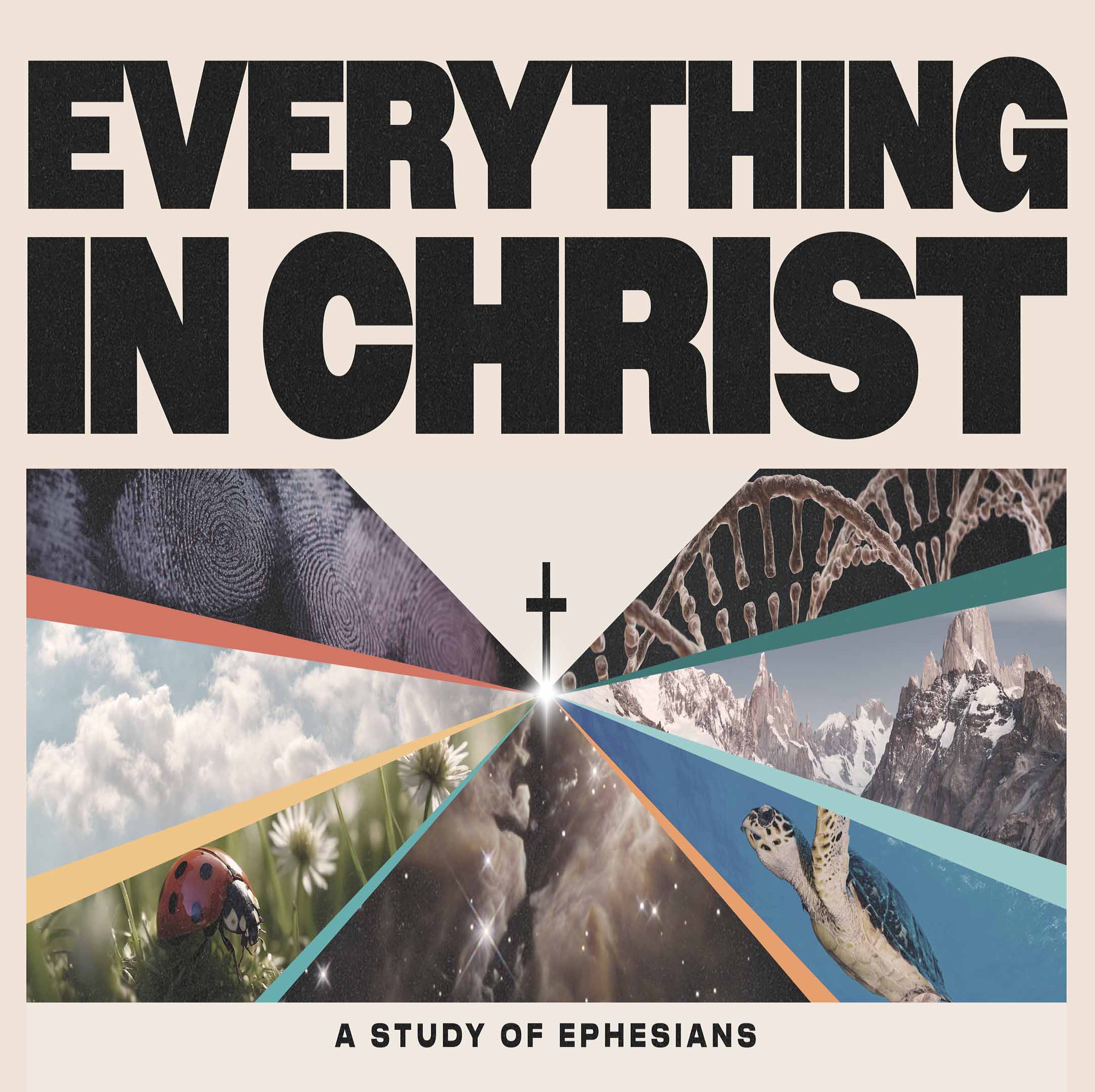
[00:00:00] Good morning, church. How are we? We're halfway alive. All right. If we haven't met, my name is Michael Tropea. I serve here as campus pastor and excited for this new series that we are going to walk through together over these number of weeks. So let me give you a higher idea where we're going for the next eight weeks. We are going to be looking at Ephesians chapters one through three. And then we're going to hit Advent and in the new year, we'll go through chapters four through six because there's really a breakdown as we study Paul's letter to the Ephesians.
[00:00:36] And the big the breakdown is this. The first chapters really is the gospel story, what God has done in Jesus. That's what Paul opens with. And from that, chapters four through six on now, what's our response to what God has done through Jesus? And so we are going to be looking at Ephesians 1 chapter, I mean, verses 1 through 14 today. And the things we're going to explore in this series is this idea that the plan is from Him.
[00:01:07] The perspective that we are ultimately to have is from Him. The people are made together because of Him. The place we are found is in him, the mysteries within him, the missions about him, and the powers from him.
[00:01:19] Everything in Christ.
[00:01:22] So the big idea for these next eight weeks, the first beginning portion that I want us to catch is this. Everything finds its unity in Jesus, and everything we have and everything we are comes from being in Christ.
[00:01:38] Everything finds its unity, its ultimate unity in Jesus. And everything we have and everything we are comes from being in Christ.
[00:01:49] So with that in mind, we are going to set up beginning, laying some groundwork for context before we move into unpacking the verses.
[00:01:58] So, background, who wrote the letter? It's always important to know who wrote the letter. I already mentioned it. It's Paul himself. Where do I get that? Right from the beginning, verses 1 and 2, Paul, an apostle of Christ Jesus, by the will of God, the apostle Paul wrote this letter. You can read about this missionary journey really in Acts 18 through 20.
[00:02:22] And who was he writing to? It's to the saints who are in Ephesus and are faithful in the Christ Jesus, grace to you and peace from God our Father and the Lord Jesus Christ.
[00:02:32] He was writing to the church? Yes, in Ephesus proper, but the outlying church is in the area too.
[00:02:39] And so a little bit of background about Ephesus. We need to understand what was happening in the world to understand the world in which he was writing to.
[00:02:46] And so Ephesus was probably one of the most important cities in the Roman world at that point in time.
[00:02:52] Located in modern day Turkey. I have a picture for us of that area in space. So Ephesus is in modern day Turkey, gives you an idea of where Corinth was, where Greece is and Rome and all that area of the world. So that is what is in modern day Turkey. And it was a wealthy, influential and strategically located along a major trade routes.
[00:03:15] If you unpack understanding Paul's missionary journeys, he often went to these places around trade routes. Why? Because the gospel would spread more rapidly there and it would be shared across the known world more than anything. Ephesus was known as a deeply religious city.
[00:03:35] It was home to the massive temple of Artemis. And here's a picture. It's one of the seven wonders of the ancient world. That is what it looks like. If anyone wants to send funds my way to go there one day, please, I am willing recipient of those funds. I want to go there to see this. But this is one of their highest points in the area. And this is what rendering of what it could have looked like at the time in this picture.
[00:04:00] Like that was the temple of Artemis. And Artemis was a goddess that they worshiped. They associated her with the blessing of fertility, of childbirth, of protection and the well being of the city.
[00:04:12] And they viewed her as a divine guardian of their lives in the community.
[00:04:18] You see, Artemis wasn't simply a God. People worship on weekend. Worship of her was woven into the economy, into the culture, into their identity as a city.
[00:04:28] That's why if you read in Acts 19, it talks about when the gospel came, it was disrupting their economy because people were turning to Jesus and not these statues that they were making money off of. And there was a great uprising that says they said great is Artemis of the Ephesians.
[00:04:43] Because Christianity had entered a culture filled with competing claims about who deserved people's worship, loyalty and identity. And the gospel disrupted it.
[00:04:52] You see, they did worship Zeus, they did worship Apollos. Artemis, I mean Apollo, Dionysius, Aphrodite, all these other emperor worshiped because they were in the Roman world. But Artemis was the God that they worshiped. They ascended to.
[00:05:07] Not only were they a religious city, they were deeply spiritual and believed deeply in the supernatural.
[00:05:15] Magic spells, the occult practices, fear of spiritual powers were a part of their everyday life. Where do we get some of that?
[00:05:24] Also in Acts 19 it tells us that when people came to faith in Jesus, many publicly burned their books which were worth an enormous amount of money at that Time.
[00:05:39] So imagine being located here in Ephesus, coming to Jesus out of that world.
[00:05:46] Your entire life had been shaped by questions like which spiritual power controls my life?
[00:05:51] How do I protect myself? Which God do I have to appease? What power can I trust?
[00:05:57] And what we will see in this letter that Paul tells these Christians that Jesus has been raised from the dead and seated far above all rule, all authority and all power and dominion.
[00:06:08] And later he'll tell them that the struggle isn't just merely against flesh and blood, but against spiritual powers. Paul isn't pretending those powers don't exist. He's telling them there's a king above every one of them and his name is Jesus.
[00:06:23] So not only were they deeply religious, not only were they deeply spiritual, but Paul knew them personally.
[00:06:30] It's predicted that Paul spent three years of his ministry cultivating this church.
[00:06:35] These churches, one of the longest periods of his ministry anywhere. He preached there, he taught there, sent leaders there. Priscilla and Aquila, if you know the narrative. Apollos, Priscilla and Aquila came and corrected to know the more fullness of the Gospel.
[00:06:52] And the church that emerged in this time and space was full of Jews and Gentiles, a divided people culturally, socially.
[00:07:01] But what Paul was speaking the Gospel into, how they are one in ultimately Jesus.
[00:07:07] And when Paul is writing this, he is in. The thoughts are that he was in prison.
[00:07:14] And there's irony there.
[00:07:16] A man in chains writes a letter about a king who reigns over everything.
[00:07:21] A city obsessed with power, spiritual forces, identity and status. Paul begins to lift their eyes above every single thing that existed in that time and space.
[00:07:30] And so before Ephesians 4 through 6. And he tells them what to do. Paul wants them to see Jesus, what God has done and who they are now in Christ. So we are going to dive into the text today.
[00:07:43] So with that lens in mind, if you would, if you're not already there, go to Ephesians 1. We're going to be reading verses 3 through 14, teaching through that today. But we're going to start in verses three through six.
[00:07:55] And as you go through today's verses, I want you to circle or underline how many times the word in him, in Christ, through Jesus, how many times. Paul is repeating this because this is a poem, a Jewish poem. It's written in a poem form actually within the Greek. But he's trying to get at something here. So we'll go through that today.
[00:08:20] Verse 3, Paul writes, Blessed be the God and Father of our Lord Jesus Christ, who has blessed us in Christ with every spiritual blessing in the heavenly places, even as he chose us in him before the foundation of the world, that we should be holy and blameless before him in love. He predestined us for adoption to Himself as sons through Jesus Christ, according to the purpose of his will, to the praise of his glorious grace with which he has blessed us in the Beloved.
[00:08:59] What do we see right out of the gate?
[00:09:02] If we boil these three verses down, we see this simple but profound idea that God's plan began long before us.
[00:09:15] God's plan began long before us.
[00:09:19] I don't know if you're like me, but when we come to this section of Scripture, oftentimes the conversations I have are on these clump of verses. And we tend to focus on a few key phrases when we read this.
[00:09:33] And maybe your eyes drift here like me. He chose us.
[00:09:38] He predestined us.
[00:09:43] Maybe yours don't, but I've had many conversations about God and faith that get hung up right there.
[00:09:50] Well, talk to me about being chosen. How can God do that? Talk to me about election. Tell me about free will and how it hits here.
[00:09:57] Talk to me about being predestined and what chosen means. How does all of this work together?
[00:10:02] Right.
[00:10:04] And why does that happen?
[00:10:08] Because I think by our very nature we tend to think God's plan is primarily about us.
[00:10:18] We naturally drift towards putting ourselves at the center of the story.
[00:10:24] God, how can you choose some and not others?
[00:10:27] How does predestination actually work? How can hell, sin, disease, suffering, election, free will, how does it all mix together and how does it ultimate work? And I get that angle.
[00:10:39] I've had those questions. I've wrestled with the text. I've walked with people who are staring at that aspect of things, and I've seen it break their faith in God.
[00:10:50] Those are real questions.
[00:10:54] But if we become so focused on those words that we miss what Paul is ultimately pointing at, we can miss the forest for the trees.
[00:11:06] Because let's keep reading the phrases that we tend to get hung up on.
[00:11:13] Christ blessed us.
[00:11:15] What in Christ.
[00:11:18] He chose us in him before the foundation of the world.
[00:11:25] He predestined us for adoption. What, to himself as sons through Jesus Christ.
[00:11:36] Do you see where Paul keeps pointing?
[00:11:39] You and I are not the focal point of God's plan.
[00:11:46] Jesus is. That's why oftentimes you'll probably get sick of he's saying Jesus is the hero, you are not. And that's good news.
[00:11:54] Paul isn't primarily trying to get us to stare inward at the spiritual blessings Although there are there. And we'll talk to that and figure out why God chose me. He's lifting our eyes upward to marvel at the God who had a purpose before there was even a me to choose.
[00:12:13] He's calling us, lifting our eyes upward to marvel at the God who had a purpose before there was ever even a me to choose.
[00:12:22] You see, in verse four, Paul takes us all the way back before your conversion. My conversion.
[00:12:34] Before our births, before Ephesus, before Rome, before Abraham, in the narrow, before Adam, foundation of the world, before there were mountains rising from the earth, before there were oceans filling their boundaries, before there were stars burning in the heavens, God already had a plan.
[00:12:59] And Jesus wasn't God's reaction when everything went wrong. Jesus was at the center of the plan from the very beginning.
[00:13:11] And church, I think this matters because so much of our struggle in life with God begins when our plans change and we assume his must have too.
[00:13:21] When something in our very real embodied lives wasn't a part of the story that we were writing for ourselves.
[00:13:29] Like the sickness or illness or diagnosis comes, like the relationship breaks, the opportunity disappears. The children that we love struggle.
[00:13:41] The prayer isn't answered a certain way that we thought should be. The future we thought had suddenly looks completely different.
[00:13:49] And because we didn't see it coming, we begin living as though God didn't see it coming either.
[00:13:56] See, we rarely say it out loud, but we sometimes and oftentimes live as if God is reacting alongside us.
[00:14:07] Okay, God, like that went wrong. What are you gonna do now?
[00:14:11] This wasn't supposed to happen.
[00:14:14] How are you going to fix it?
[00:14:16] This isn't how my life was supposed to go.
[00:14:20] And where are you?
[00:14:24] And suddenly the God who had a plan before the foundation of the world has been reduced in our minds as someone scrambling to respond to the latest circumstances of our lives.
[00:14:36] You see that tension is all over the book of Job. That's why I love reading through Job. Outside of Jesus, outside of maybe Paul, Job had a hand that I don't want to have.
[00:14:52] Like, Job's life collapses around him and he wants answers.
[00:14:58] God, explain this to me.
[00:15:02] Explain how this could possibly fit.
[00:15:07] And when God finally speaks, I think it's in job 38.
[00:15:11] His response is fascinating.
[00:15:16] He doesn't give Job the explanation that Job wants. Well, here is how it happened, and here's the narrative. And here's like all these pieces. And I promise you, no, he doesn't do that.
[00:15:25] What does he do?
[00:15:27] He asks Job a question. Where were you when I laid the foundation of the earth.
[00:15:35] Job, were you there when I determined its measurements?
[00:15:39] Were you there when the morning stars sang together?
[00:15:43] Were you there when I told the sea where to stop?
[00:15:47] You see, it's not God dismissing Job's pain. It's God expanding Job's perspective.
[00:15:56] Job, you're looking at one moment of the story. I see the whole thing.
[00:16:02] You weren't there when I began it, and you cannot yet see how I'm going to finish it. And that's exactly where Paul begins with the Ephesians. Before you were here, God was working.
[00:16:14] Before our circumstances changed, God had a plan. Before sin fractured this whole world, Jesus was the center of the plan.
[00:16:25] And when your plans fall apart, and they will, God's eternal purpose is not.
[00:16:33] You see, God is not reacting to history.
[00:16:37] God is accomplishing his purpose through it.
[00:16:42] And that's why our confidence, and you'll continue to hear me repeatedly say, can't ultimately rest in whether we understand what God is doing in this particular moment in your lives, in our world, in our time and space.
[00:16:55] But our confidence rests in who is at the center of the plan the whole time.
[00:17:03] Because before you ever had a plan for your life, God had a plan for all of history.
[00:17:09] And Jesus has always been the center point of that plan.
[00:17:14] God's plan began long before you and I were here, before the foundations of the world.
[00:17:22] But let's see where Paul goes next in the text.
[00:17:29] Ephesians 1:7:9.
[00:17:32] Paul writes, in him, we have redemption through his blood, the forgiveness of our trespasses, according to the riches of his grace which he lavished upon us in all wisdom and insight, making known to us the mystery of his will according to his purpose, which he set forth in whom Christ.
[00:17:57] Like we just got done seeing. God's plan that began long before us. God's cosmic plan, from everlasting to everlasting.
[00:18:05] It began long before us, and it centered on Jesus. But then the cosmic plan becomes personal.
[00:18:15] These verses show us that God's plan becomes personal in Jesus. Like again, let me read verse seven.
[00:18:22] In him, we collectively have redemption through his blood, the forgiveness of our trespasses according to the riches of his grace which he lavished upon us.
[00:18:34] Think about what I shared about Ephesus and how these words would have landed the church receiving this letter.
[00:18:43] Like these people lived in a world filled with gods.
[00:18:48] Artemis towered. The temple of Artemis towered over the city.
[00:18:53] There was temples offering sacrifices, magic rituals, all kinds of spiritual practices.
[00:19:01] Much of the religious world around them operated on some version of the exchange. What do I need to offer?
[00:19:09] What do I need to do to perform? What God do I need to honor to get in a good account? What do I need to gain their favor, secure protection, or avoid their displeasure?
[00:19:21] You see, in that world, you approach the gods hoping somehow to get in their good graces.
[00:19:28] But Paul says that's not the story of the God that we believe revealed in Jesus.
[00:19:34] You do not work your way into his good graces. His grace came looking for you.
[00:19:41] He chose to adopt you. He came near to you in Christ. He redeemed you. He forgave you.
[00:19:49] And Paul doesn't just say, and I love it, he doesn't just say a little bit of grace. God in Christ has lavished grace upon us.
[00:19:59] You see, the movement of Christianity isn't humanity desperately trying to reach to God. It is God coming near to us in Christ.
[00:20:08] Where every other religion says, here's what you have to do to jump to be either JV or varsity and have to do more to get up.
[00:20:16] Christianity says, everything has been done in Christ for you. And that's what makes this incredible.
[00:20:25] You see, we've just said that God's plan is infinitely bigger than us.
[00:20:30] Like it's stretched from before the foundation of the world to the fullness of time.
[00:20:36] We read it's a cosmic plan involving heaven and earth and all of creation. And yet somehow, in the middle of the plan that is so much bigger than you and I, God sees us.
[00:20:49] God sees our pain.
[00:20:52] God sees our present circumstances that you may feel are too broken for healing.
[00:21:00] Your marriage that you feel like is in a precarious place. He sees you. He knows the brokenness and sin that exist that you walk in. He knows the dreams that are unfulfilled, relationships that seem beyond repair.
[00:21:13] God sees you and he comes to you. Even there.
[00:21:18] God forgives you even there.
[00:21:21] God adopts you there. God redeems you there.
[00:21:27] So, no, you and me aren't the center of the story.
[00:21:35] But don't confuse I'm not the center with I don't matter.
[00:21:39] That's why all these spiritual blessings are listed out. The opposite is true.
[00:21:45] The God who is doing something infinitely bigger than you has graciously chosen to bring you into what he is doing.
[00:21:53] And you don't have to appease him to get into his grace in Christ.
[00:21:57] He lavishes grace upon you.
[00:22:01] Like my Catholic boy upbringing. For 16 years of my life, all I heard was about a God who was different. I had to do my confession every like five months and say my six Hail Marys and my 18 our fathers. And then I'm good for like six more months, right?
[00:22:17] Me trying to work my way to God.
[00:22:20] Then when I heard the gospel of God sent Jesus to us to do what I can never do, that changed the dynamic.
[00:22:29] God's plan became deeply personal in Christ. And I think this matters, matters in this room to us today. Because even though we aren't walking into temples or sacrifices to Artemis, a lot of us are still walking around trying to appease God.
[00:22:45] Like, did I do enough?
[00:22:48] Did I pray enough this week? I only opened my Bible five out of seven days, right?
[00:22:56] Have I been good enough? I messed up again. So I need to clean myself up before I come back, guys. And before we realize it, we can turn Christianity into the very thing the gospel came to free us from, which was religion. Dead religion. Religion says, do enough, sacrifice enough, clean yourself up enough, and maybe you can get into God's good graces.
[00:23:19] But here's what the gospel says. You could never do enough. So Jesus did it for you.
[00:23:26] He lived the life you couldn't, died the death your and my sin deserved, and paid the debt you couldn't pay.
[00:23:36] And through his blood, Paul says, you have redemption and forgiveness. Redemption in full, forgiveness in full, past, present, future, forgiveness, all secured because of Jesus.
[00:23:50] And I'll go back to that language that Paul uses. He didn't just sprinkle enough grace on you to get you through your day. No, he lavishes it upon you.
[00:24:00] Jesus didn't make just a down payment and leave you. Hey, you got to work the rest of your way. No, his blood is sufficient and covered all. His forgiveness is in full. His redemption is sufficient. His grace is lavish and sufficient.
[00:24:18] So you don't obey from that place to become accepted. You obey because in Christ you have been fully accepted.
[00:24:26] You don't work anymore for God's grace. You live from God's grace. And you can rest today because Jesus has already accomplished what you never could. It is finished.
[00:24:39] That's Paul's point, guys.
[00:24:42] God's cosmic plan becomes deeply personal in Jesus.
[00:24:50] So God had a plan long before us, from the foundations of the world, and it was centered on Jesus.
[00:24:56] God's plan becomes deeply personal with all these spiritual blessings of redemption, of forgiveness, of salvation and the mystery of his will, the wisdom and insight.
[00:25:08] But Paul isn't finished yet because the same Jesus who redeems you, whose grace is lavished upon you, is doing something far bigger than you. And he's about to pull the curtain in these next verses to where the ultimate everything's ultimately headed and it all centers on the one whose body was broken, whose blood was shed, that we're gonna celebrate and remember in a moment today.
[00:25:34] So God's plan began before us. God's plan became personal in Christ. And finally, God's plan is everything in Christ.
[00:25:45] Where do I get that? Ephesians 9:14.
[00:25:50] Making known to us the mystery of his will according to his purpose, which he set forth in Christ as a plan for the fullness of time. And here focus on this to unite all things in him, things in heaven and things on earth.
[00:26:08] In him we have obtained an inheritance having been predestined according to the purpose of him, who works all things according to the counsel of his will.
[00:26:18] So that we who are the first hope in Christ might be to the praise of his glory in Him. You also, when you heard the word of truth, the gospel of your salvation, and believed in him, were sealed with the promised Holy Spirit, who is the guarantee of our inheritance until we acquire possession of it, to the praise his glory.
[00:26:40] That's a lot to bring to this because there's so many things, beautiful things here that we can bring out.
[00:26:47] Like I said, salvation, redemption, forgiveness, mystery of his will, the purpose that he has, the first to hope in Christ, the word of truth, the sealed promised Holy Spirit, guarantee of our inheritance. That comes so much beauty there. But don't miss the overarching idea that God's plan is everything brought into Jesus.
[00:27:08] Paul says God is moving all of history toward a day when everything fractured by sin and brokenness will be brought together under Jesus, heaven and earth.
[00:27:20] What is seen, guys, and what is unseen, creation and humanity like. This is why this idea of getting saved is not an escape to heaven.
[00:27:34] He wants us to live the kingdom out here and now.
[00:27:39] God isn't abandoning what he has made, he's redeeming it.
[00:27:44] That's why I love Genesis 1, 2 and 3 so much. Not as much 3, but 2, 1 and 2.
[00:27:50] Because it's God dwelling with humanity in a garden.
[00:27:56] And if you look back, if you look forward in Revelation, it's going to end with a new heaven and a new earth. Earth.
[00:28:02] God dwelling with his people again as Jesus at the center of it all.
[00:28:07] That's where the story is going.
[00:28:09] Everything broken by sin will become untrue.
[00:28:15] My Jesus storybook fellow believers here, everything broken by sin that God intends to redeem finds its restoration in Jesus.
[00:28:25] And that's why we will encourage and, and point you and plead with you before God each and every Sunday that Jesus isn't just part of your Life. Everything in your life should come under Jesus.
[00:28:38] How you're doing school in the season of life, is it reflecting Jesus in how you're doing your work, in how you work. Are you just working for a paycheck or are you working for the glory of God in Christ?
[00:28:55] It's why we're gonna cultivate marriages here.
[00:28:58] Because it isn't just about your happiness, but it's a reflection of a picture of Christ in his church.
[00:29:06] It's why last week we talked about loving your neighbor. Because our love is a reflection by the one who has first loved us.
[00:29:16] And the way you forgive, we're gonna call you to forgiveness of others. Why? Because the One who has shaped us in Christ has forgiven us in full. It's why we're gonna call you to cultivate how you handle money and generosity, your relationships and steward them, your sexuality and how he's designed it and call you into Christ there. It's why we're gonna call you to serve and lay down your time to say, God is this honoring of you.
[00:29:42] That's why we're gonna point you towards Jesus. And how are you parenting and talking to your children and cultivating their hearts? Is it pointing towards Christ or are you just reactionary?
[00:29:52] So we want to point you towards in their suffering that you very real walk in. Are you suffering and understanding that he is with you and pointing towards Christ. And that's why we want you to put your future before the Lord to say, are you bringing that under Christ? All of it comes into Christ.
[00:30:09] And even now the Holy Spirit Paul writes to the Ephesians says, has sealed us as the guarantee that God will finish what he has begun. You don't do it alone. You don't do it in your own strength.
[00:30:23] The guaranteed down payment of his Holy Spirit here and now until he makes all things right and gives us the inheritance that ahead. We're living today as people who already belong to future God has promised.
[00:30:37] Because that's the mystery Paul says has now been revealed.
[00:30:42] You see, Jesus isn't simply God's plan for getting you to heaven.
[00:30:47] Jesus is God's plan for bringing heaven and earth back together.
[00:30:53] Yes, Jesus is where sinners are reconciled to God. Jesus is where divided people become one. It's how he's making this whole us one body, but also individual members of it.
[00:31:07] Jesus is where broken lives begin to be restored, where addictions are freed. Jesus is where creation itself is ultimately headed. Everything in Christ, everything is through him and everything is moving toward Christ.
[00:31:23] And how does God bring all of this brokenness back together.
[00:31:30] Something we'll preach every single week through the cross of Christ.
[00:31:35] That's what brings us to this table. So I'll ask you to take your elements today.
[00:31:43] See as you get them.
[00:31:46] Before there can be a crown, there's a cross.
[00:31:53] Before revelation gives us a restored heaven and earth, the Gospel gives us a broken body and poured out blood.
[00:32:03] The one through whom God will reconcile all things is the one who gave himself to reconcile us to God.
[00:32:12] And as we come to this table to celebrate, to remember, the cosmic plan of God came down to something you could see and touch. A broken body and blood poured out for us by Jesus.
[00:32:24] And here's what I'm going to say. Before you take the elements, if you do not, if you are not walking in a relationship with God through Jesus, I'm just gonna ask you to pass on taking these elements.
[00:32:34] And while we take the elements, I want you to think about who this Jesus is and what it's like to have a relationship with God in Jesus and submit to that. But if you are in Christ today, I want us to remember that his body was given for us.
[00:32:53] When we take the cup to remember and celebrate, his blood purchased our redemption and forgiveness. And it's become personal in Christ.
[00:33:03] And as we eat and drink together, we're not only looking backward at what Jesus has done, we're looking forward at what Jesus will do. The inheritance in full.
[00:33:11] And the Spirit is our guarantee that our inheritance is coming. And the story isn't finished. So if you would take your elements with me, I'm going to read from 1st Corinthians 11, where Paul reflects on the Last Supper and we believe in the sacrament of Communion.
[00:33:31] Again, to remember, but also to celebrate. Yes, God's plan began long before us in Jesus, but he includes us in that plan.
[00:33:41] And he's bringing everything together in Christ.
[00:33:46] Paul writes, for I received from the Lord what I also delivered to you, that the Lord Jesus, on the night when he was betrayed, he took bread.
[00:33:58] And when he had given thanks, he broke it and said, this is my body, which is for you.
[00:34:08] Do this in remembrance of me, Church body. Let us take this bread, remembrance of what God has done through Jesus.
[00:34:17] Thank you, God.
[00:34:22] Thank you, jesus.
[00:34:27] In the same way also, he took the cup after supper, saying, this cup, this cup is the new covenant in my blood. The covenant that he has paid for in the full. The covenant that says, you don't have to work to get your way to me. He has worked perfectly through this broken body and shed blood to come to you new covenant in my blood. Do this as often as you drink it in remembrance of me.
[00:34:56] For as often as you eat this bread and drink the cup, you proclaim the Lord's death until he comes. Church body, let's take the cup together.
[00:35:08] Thank you God.
[00:35:14] God, I thank you.
[00:35:17] God, I thank you that your plan began long before us, before the foundations of the world. You had a plan and it was Jesus.
[00:35:29] So you aren't responding to history. You aren't responding to our circumstances. You have already and you are continuing to work throughout history to bring everything into Christ. But not only are you cosmically working, but God, you are personally knowing us. You see us, you forgive us, you are redeeming us. You are making all broken sad things come untrue.
[00:35:53] And thank you for seeing us.
[00:35:56] Thank you for saving us into Christ.
[00:36:01] Thank you for knowing our circumstances and dwelling with us there, for being our peace through this broken world.
[00:36:08] Thank you for giving us the seal, the guarantee, the promised Holy Spirit to walk with us in our very real embodied lives as we walk towards full restoration in you one day when you will reign over everything and we can see you in full, every tear will be wiped away, every brokenness be done away with. And we will see you with eyes fully seeing who you are.
[00:36:33] And until that day, thank you for adopting us and welcoming us into your story that you've done through Jesus and God. If there are any in the room that don't know your freedom, don't know your love, it says in love you predestined us through Jesus that I pray that they know that they are loved by a God who sent his only son to die on their behalf, to rise again triumphantly and overcome sin, death and the grave. And who is alive today and you love them, help them to turn from their sin, repent and believe the good news of the gospel today. And if there are any, I pray that in Jesus name right now.
[00:37:11] God, thank you for your broken body and shed blood.
[00:37:15] Thank you for the plan that you've put in place that you're making everything right.
[00:37:21] Thank you Jesus. And we pray all this in Jesus strong mighty name. Amen.
[00:37:25] Church body, let's stand in response.